
Sold
Grand Tour Bronze Figure of Dionysus
This piece has found a home. We regularly acquire comparable objects — tell us what you are looking for, or see the pieces below.
-
-
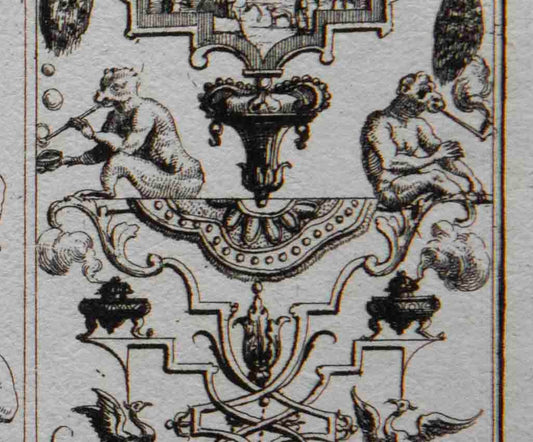
Nuremberg (Johann Christoph Weigel), Published 1680–1726
Four 17th Century German Engravings of Grotesques
-
-
-
-






About this object
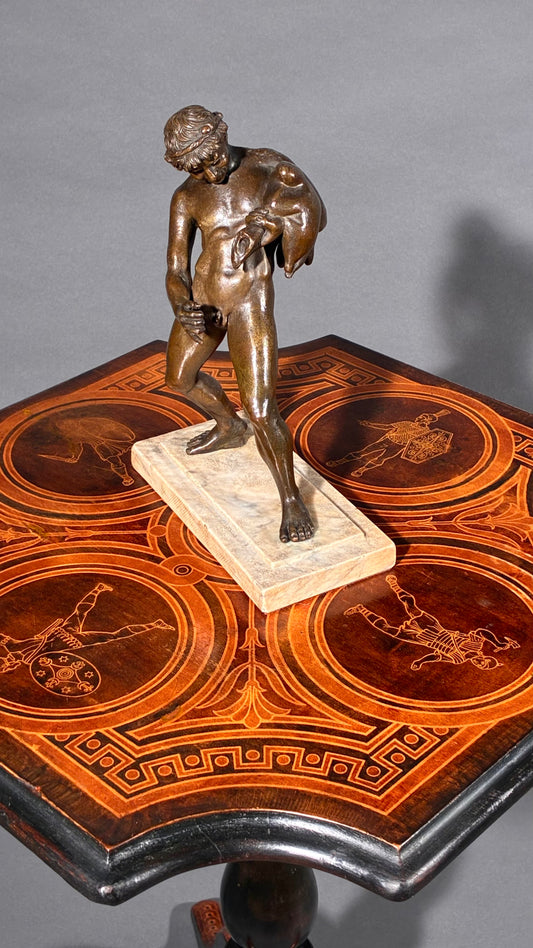
A very decorative and rare 'Grand Tour' patinated bronze figure of Dionysus (previously identified as Narcissus). By the Sommer foundry, Naples.
Italy, late 19th century
Great quality, original 'verdi-gris' patination.
Why we like it
Beautifully cast after the original at the Naples Archeological Museum, this handsome figure reflects the Ancient Greek ideals of beauty.
In Greek mythology Dionysus is the god of wine and dance, of irrationality and chaos, representing passion, emotions and instincts. Just as his Roman conterpart Bacchus, Dionysus is associated with sensuality, please and abandon.
Coveted by the 19th century intellectuals and aesthetes, such exquisite objects were not mere decorations, but symbols of their owner's classical values and refined taste.
History
The statue of Dionysus (previously misidentified as Narcissus) is a copy of the original bronze, discovered in 1862 in the Vicolo del Balcon Pensile in Pompeii, now preserved in the Museo Archeologico Nazionale, Naples. Oscar Wilde, whose London home was filled with classical statuary, displayed a copy prominently on his mantelpiece.
The Sommer Foundry
Chiurazzi, De Angelis and Sommer where the main Neapolitan foundries that catered for the needs and tastes of the grand-tourists throughout the 19th and early 20th centuries. The latter was founded by by Giorgio Sommer, a well-known photographer and artisan of German origin. He founded his studio in Naples in 1857 and starting from the 1870s began the production of bronze and terracotta copies of ancient sculptures. Three different types of patination were available, the most common being the "Herculaneum", "dark green and almost shiny" patina, the "Pompeii", "green and blue not burnished", and the "Renaissance", "brown, shiny, burnished". The present figure displays its original 'Pompeii' patination.
Not quite it?
Tell us what you are hunting for
We buy every week, and much of what we find never reaches the site. Describe the piece and we will write when it turns up.