
Sold
Pair of 19th Century Grand Tour Volute Kraters
This piece has found a home. We regularly acquire comparable objects — tell us what you are looking for, or see the pieces below.
-
-
-
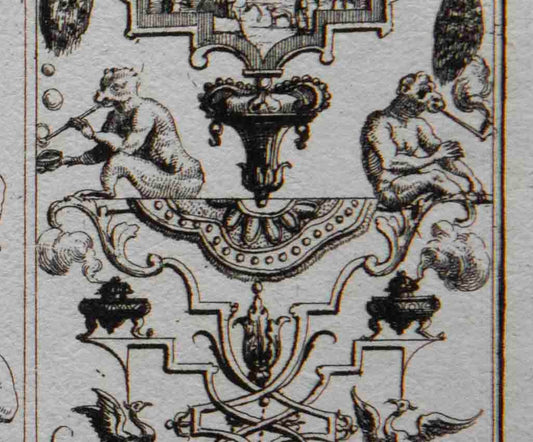
Nuremberg (Johann Christoph Weigel), Published 1680–1726
Four 17th Century German Engravings of Grotesques
-
-
-






About this object
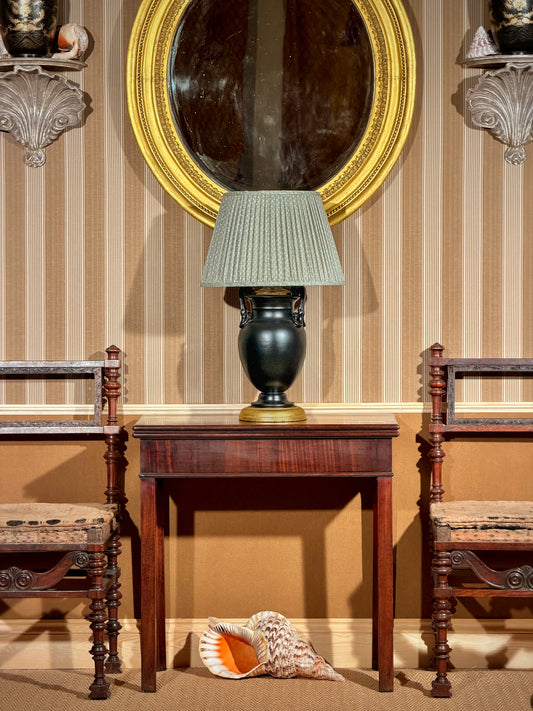
A decorative pair of Grand Tour bronze-patinated urns of ancient Greek 'volute krater' form,
Italy, 19th century.
Why we like them
We love the decorative look of these urns, evoking the Grand Tour travels of the 19th century. Perfect for lamp conversion.
Design
This shape was introduced in the late 6th century B.C. and was favoured by significant artists who worked in terracotta and in bronze. The earliest example in bronze belongs to the late 5th century B.C. and was found in a tomb in Agrigento. A characteristic of volute-krater handles is the fine articulation of the volute itself and of the lower terminals where they rested on the shoulder of the vase. Here, as in most metal examples, they assume the form of swans' heads. A pair of handles of this design is in the collection of the Metropolitan Museum of Art, New York.
Not quite it?
Tell us what you are hunting for
We buy every week, and much of what we find never reaches the site. Describe the piece and we will write when it turns up.