
Sold
Collection of Grand Tour Porphyry Specimens
This piece has found a home. We regularly acquire comparable objects — tell us what you are looking for, or see the pieces below.






About this object
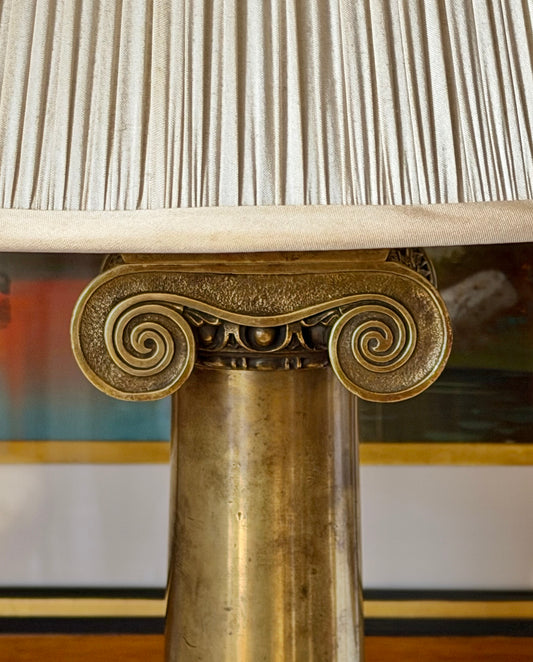
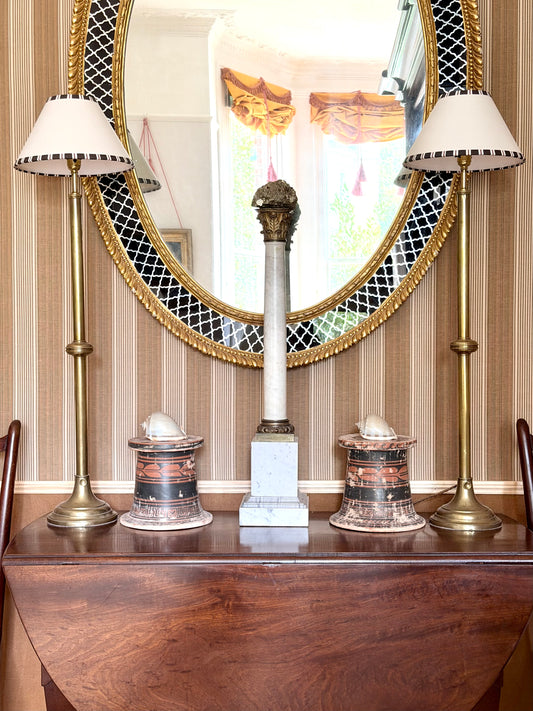
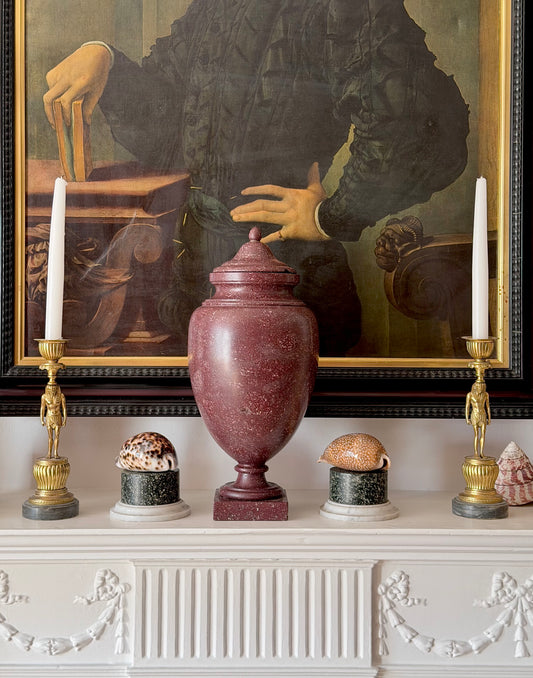
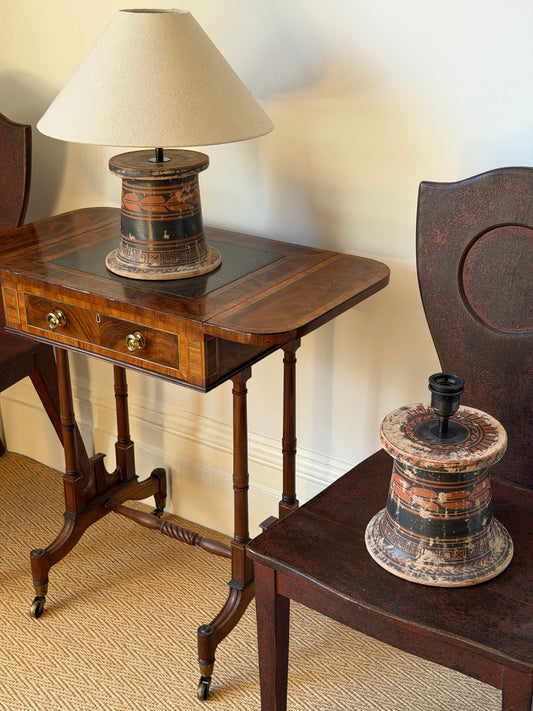
A superbly decorative collection of Grand Tour porphyry specimens, to include Egyptian red porphyry and Greek green porphyry.
Italy, 19th – 20th century.
Why we like them
We love the colour and sculptural quality of these rare objects, evoking classical sophistication of a well-travelled gentleman's library of the Enlightenment era.
Specimens
The two columnar fragments are made of Egyptian red porphyry, also called Roman Imperial porphyry (porfido rosso romano).
The term porphyry is from the Ancient Greek πορφύρα (porphyra), meaning "purple". This 'Imperial Porphyry' comes from 600 million-year-old volcanic rock from Gabal Abu Dukhan quarry in the Eastern Desert of Egypt which was discovered by Romans in AD 18. It is highly prized for its rarity and noble 'Imperial' purple colour, a symbol of power. Pieces such as these were often made from broken ancient pieces, 'upcycled' in the 17th-19th centuries.
Greek green porphyry, (porfido verde antico)
'One of the most precious kinds is the green Lacedaemonian marble, more beautiful and vivid than any other'. [Pliny] 'Lacedaemonian' being another name by which Sparta was called. Together with the red porphyry, the stone had been used to stunning decorative effect since the Roman times through to the Renaissance, including the Cosmati floors in various cathedrals.
Not quite it?
Tell us what you are hunting for
We buy every week, and much of what we find never reaches the site. Describe the piece and we will write when it turns up.