
Sold
Fine Pair of 19th Century Grand Tour Bronze Volute Krater Vases
This piece has found a home. We regularly acquire comparable objects — tell us what you are looking for, or see the pieces below.
-
-
-
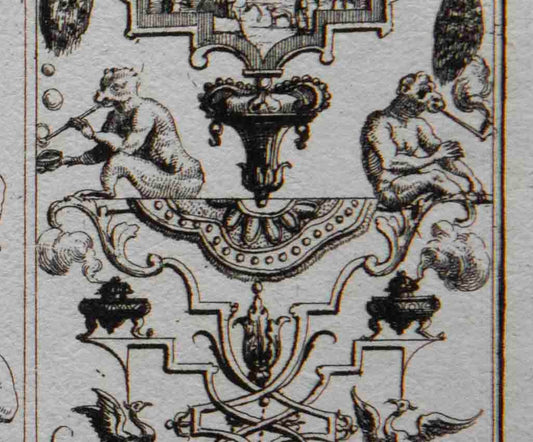
Nuremberg (Johann Christoph Weigel), Published 1680–1726
Four 17th Century German Engravings of Grotesques
-
-
-






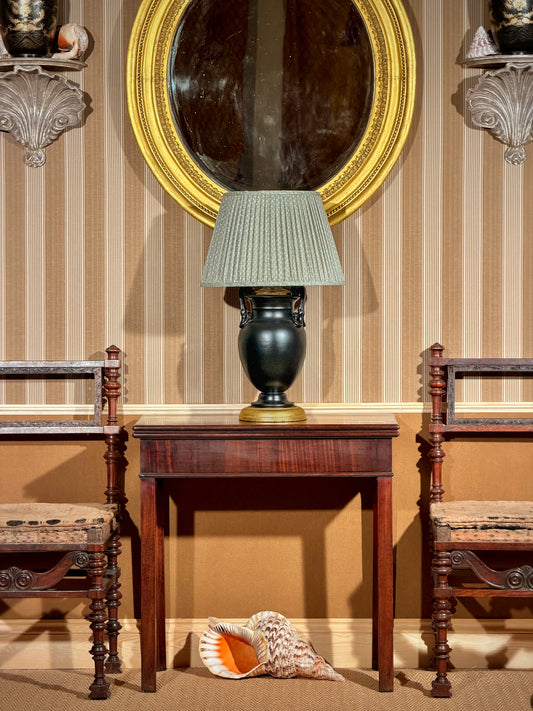
About this object
A fine and decorative pair of Grand Tour bronze vases of ancient Greek volute krater form,
France, early 19th century.
Why we like them
Their pure, unembellished form perfectly embodies aesthetic values of ancient Greeks.
Design
This shape was introduced in the late 6th century B.C. and was favoured by significant artists who worked in terracotta and in bronze. The earliest example in bronze belongs to the late 5th century B.C. and was found in a tomb in Agrigento. A characteristic of volute-krater handles is the fine articulation of the volute itself and of the lower terminals where they rested on the shoulder of the vase. Here, as in most metal examples, they assume the form of swans' heads. A pair of handles of this design is in the collection of the Metropolitan Museum of Art, New York. A complete example (found in Ruvo) of almost identical form is in Naples Archeological Museum (inv. 73143). Other similar examples include the Vaste krater, now in Boston Museum of Fine Arts (inv. 99483), and a krater that is currently in the George Ortiz collection.
Not quite it?
Tell us what you are hunting for
We buy every week, and much of what we find never reaches the site. Describe the piece and we will write when it turns up.