
Sold
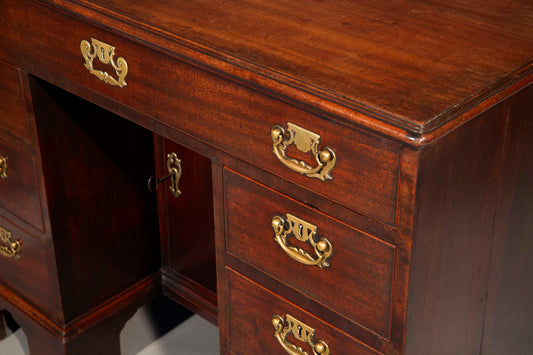
George III Mahogany Bow-Front Commode, Attributed to Gillows
This piece has found a home. We regularly acquire comparable objects — tell us what you are looking for, or see the pieces below.






About this object
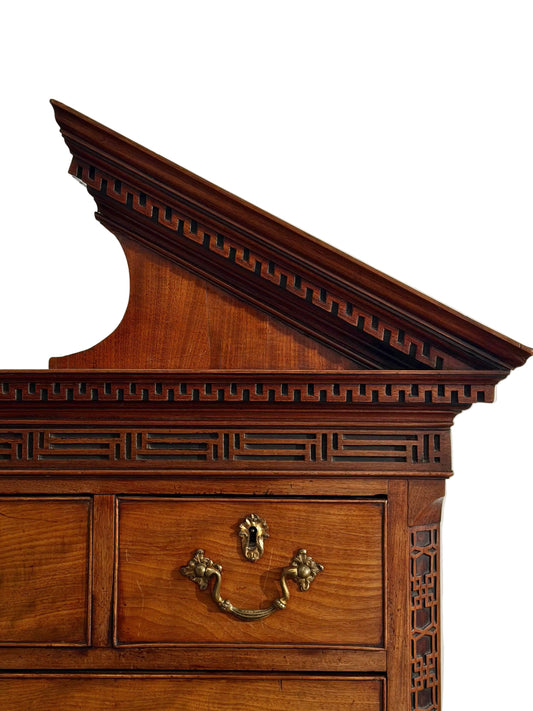
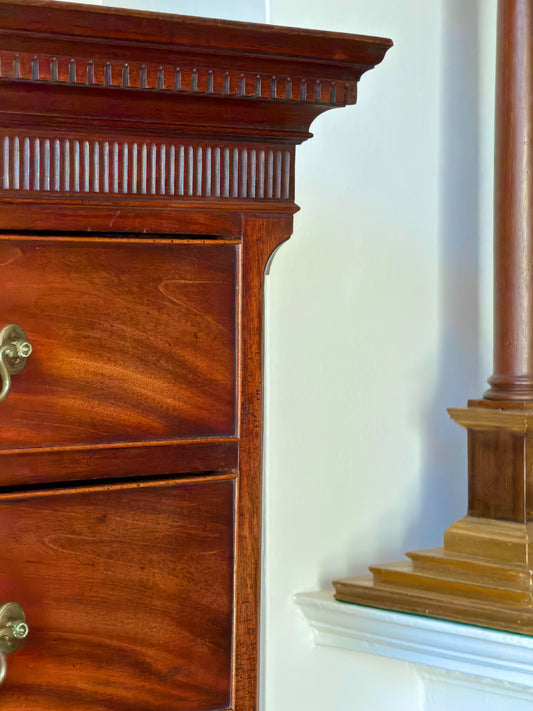
A fine George III bow-fronted mahogany chest of drawers, almost certainly by Gillows of Lancaster and London.
English, c. 1800
Why we like it
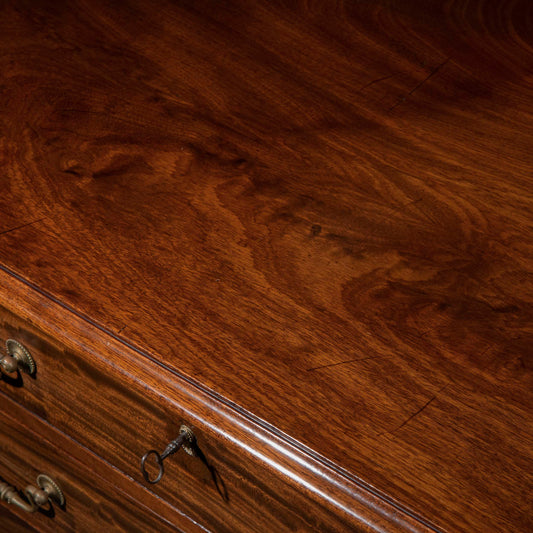
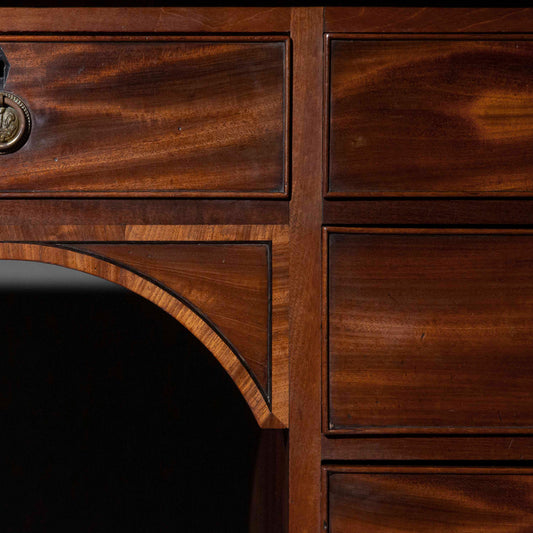
This remarkably well drawn design, introduced by the Gillows firm as early as in late 1780's, was so good that it had remained popular some 10-20 years later. This particularly rare suvivor of the later examples, remarkably, still retains all its original finely turned knobs - a fashionable feature at the turn of the century, and the original pale-blue paper drawer linings. Knobs of this signature Gillows design are often seen on tables but very rarely on commodes - due to their fragile nature they were prone to chipping and breaking under the load of the heavy drawers, or simply were replaced by the dealers. Beautifully original unrestored condition, superb mellow colour and rich patination.
The form of this chest conforms to the Gillows design for a commode, dated 24.10.1789, made by Cooper for the London shop (see L.Boynton, Gillow Furniture Designs from 1760 to 1800, fig. 118); and also to another design for a satinwood chest of drawers, about 1789, (ditto, plate 11). The paneled or 'framed back' of present piece is typical of Gillows case pieces (ditto, fig. 117).
The striking resemblance of the present chest to the Gillows' drawings, as well as a number of constructional and design features, common with the documented examples, including the elegant outswept feet, referred to by Gillows as 'French' feet, original knobs and the triple-panelled backboard, make this attribution to the Gillows firm fairly certain. The present piece's exceptional quality, smart choice of veneers and pleasing proportions are also typically associated with the Gillows' oeuvre.
A closely related example, stamped Gillows, was sold at Christie's, 24 May 2011, lot 317. For further related examples, see Christie's, 8 July 1999, lot 137; and Sotheby's, 27 September 2012, lot 149.
Established in the early 18th century, Gillows of Lancaster are among the few most celebrated English furniture makers, famed for their use of fine timbers and exceptional quality of craftsmanship.
Not quite it?
Tell us what you are hunting for
We buy every week, and much of what we find never reaches the site. Describe the piece and we will write when it turns up.