


Japan, Edo period, circa 1830–60
Japanese Urushi Hokkai-Bako with a Tokugawa Family Crest, Edo Period
Mainland UK delivery: Free
Couldn't load pickup availability
| Period | Edo period, circa 1830–60 |
|---|---|
| Origin | Japan |
| Material | Black and gold lacquer (urushi) |
| Dimensions | H 51 × W 40 × D 40 cm H 20 × W 16 × D 16 in |
| Condition | Original unrestored condition, chips and fading to lacquer, two bronze lozenges missing from supports. |
| Provenance | Private collection, UK |
An incredibly rare, early to mid-19th century Japanese black and gold lacquer box Japan, circa 1830-60.
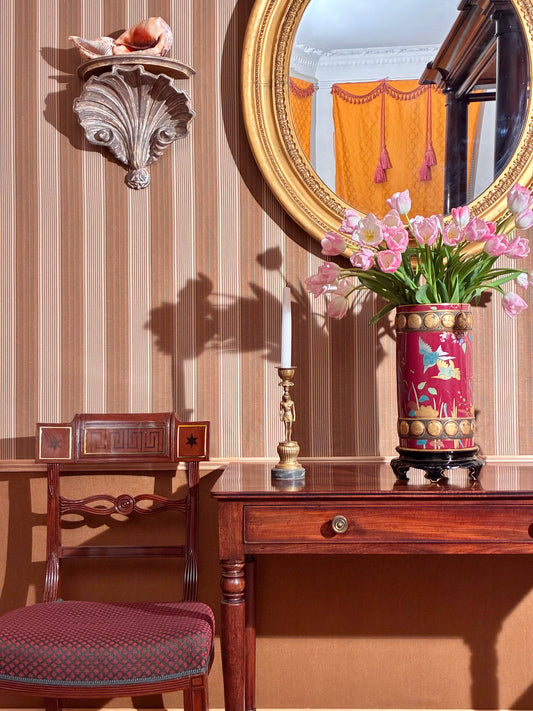
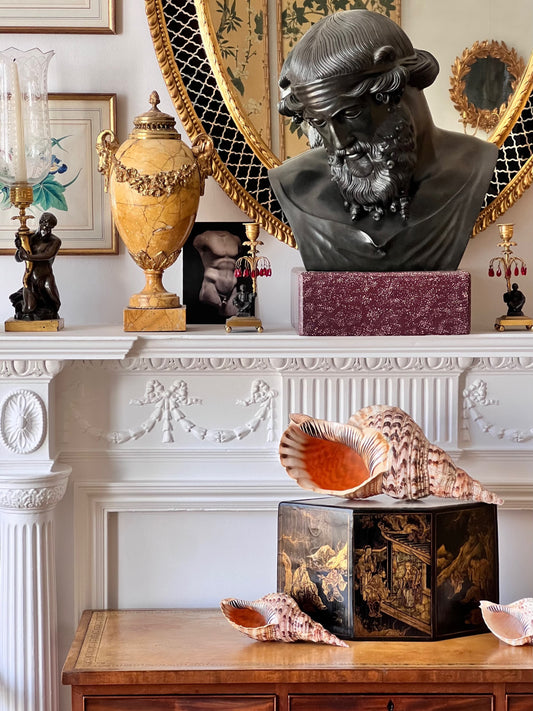
An identical Hokkai-Bako, one of a pair, is decorating a bathroom (formerly a dressing room) at Castle Howard in Yorkshire - see second photo. (Image courtesy: our dear friend Bruce Shostak, shostakandcompany.com).
Why we like it
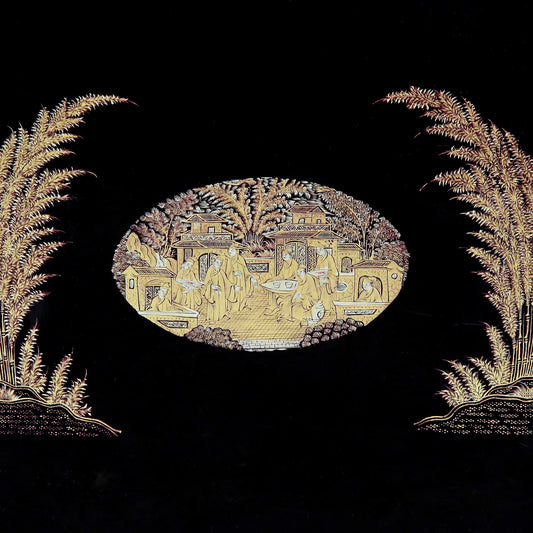
Superb quality, exquisite gilt decoration, wonderfully preserved original condition. A museum-worthy piece for a true collector of only the best of its kind.
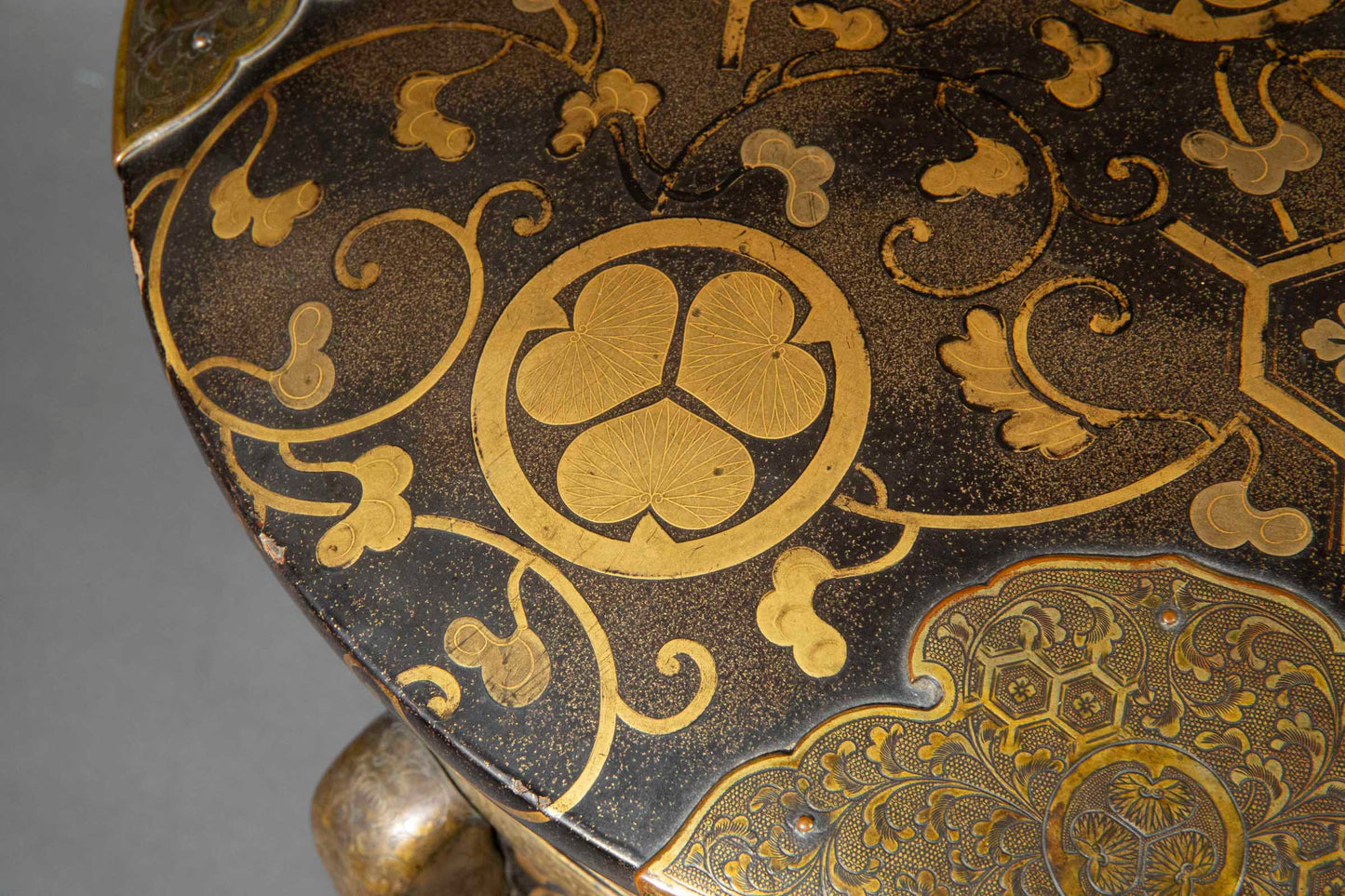
The most defining features of this Hokkai are its elaborate gold embellishments. The surface is densely decorated with two primary motifs. The first is a continuous, scrolling foliate pattern known in Japanese decorative arts as karakusa (arabesque). This motif, characterised by interlocking vines and leaves, symbolises eternity, prosperity, and unbroken familial lineage.
Superimposed over the karakusa network are several prominent, circular crests. These crests are unmistakably the mitsuba aoi, or the "triple hollyhock" mon (heraldic emblem). The mitsuba aoi is one of the most strictly regulated and historically significant symbols in Japanese history, as it was the exclusive emblem of the Tokugawa clan, the shogunate family that ruled Japan from 1603 until the Meiji Restoration in 1867. During the Edo period, the unauthorized use of the Tokugawa crest was a severe offense, meaning that authentic items bearing this mark were either commissioned directly by the shogunate, used by immediate branch families, or presented as high-level diplomatic or ceremonial gifts.
A closely related gold-decorated black lacquer sake bottle (tokkuri) featuring the same Tokugawa clan crest is in the MET Collection
Dimensions
Width: 40 cm / 16”
Depth: 40 cm / 16”
Height: 51 cm / 20”
Condition
Original unrestored condition, chips and fading to lacquer, two bronze lozenges missing from supports








Not quite it?
Tell us what you are hunting for
We buy every week, and much of what we find never reaches the site. Describe the piece and we will write when it turns up.