
Sold
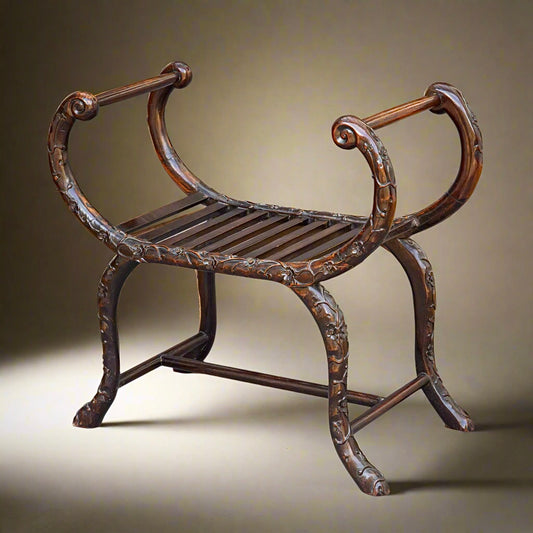
Regency X-Frame Stool
This piece has found a home. We regularly acquire comparable objects — tell us what you are looking for, or see the pieces below.






About this object
A Regency period parcel-gilt 'curule' stool of compact proportions.
England, circa 1820
Why we like it
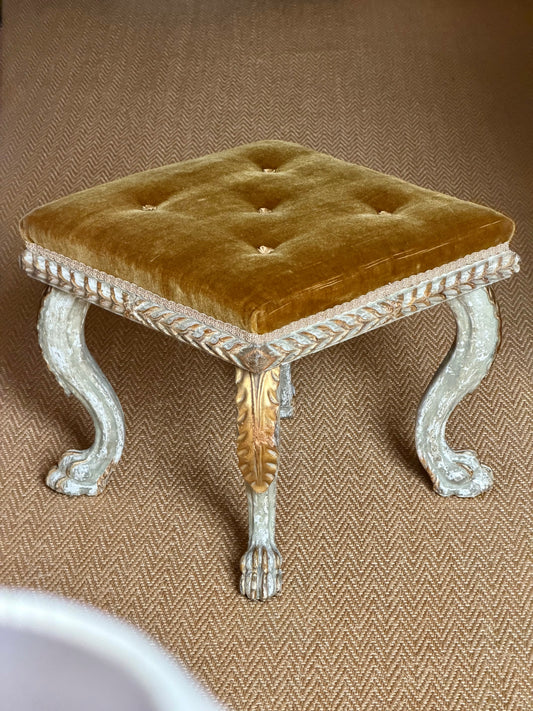
A lovely, well-proportioned example, its upholstry inspired by Madeleine Castaing's interiors.
Sella Curulis, the chair of state, is derived by the ancient writers from currus (chariot). The sella curulis is said to have been used at Rome from a very remote period as an emblem of kingly power, having been imported, along with various other insignia of royalty, from Etruria. However, much earlier stools supported on a cross-frame are known from the New Kingdom of Egypt. A related design, along with two other ancient fragments from the Museo Borbonico in Naples, Italy, is illustrated in John Murray, A Dictionary of Greek and Roman Antiquities, London, 1875, p.520.
The form found its way into stylish but non-royal decoration in the archaeological second phase of neoclassicism in the early 19th century.
Not quite it?
Tell us what you are hunting for
We buy every week, and much of what we find never reaches the site. Describe the piece and we will write when it turns up.