


Keane Baronets: Sterling Silver Armorial Crest Finial by Benjamin Smith II
Couldn't load pickup availability
Three Fixed Delivery Rates
Free delivery over £10,000

LAPADA
-
Longtime Member

CINOA


Sterling silver crest of the Keane baronets of Cappoquin — “A Cat-a-Mountain sejant proper supporting in his dexter paw a Flagstaff thereon a Union Jack proper”. Benjamin Smith II, London, circa 1820. Now on a giallo antico and porfido verde base.
Why we like it
Today, a striking object in its own right, retelling a fascinating story in a way that few objects do — an ancient family, an important Irish country house, the drama of evolving loyalties, a silversmith of the very first rank — all coming to life through the figure of a seated cat, exquisite as a piece of jewellery!
Context
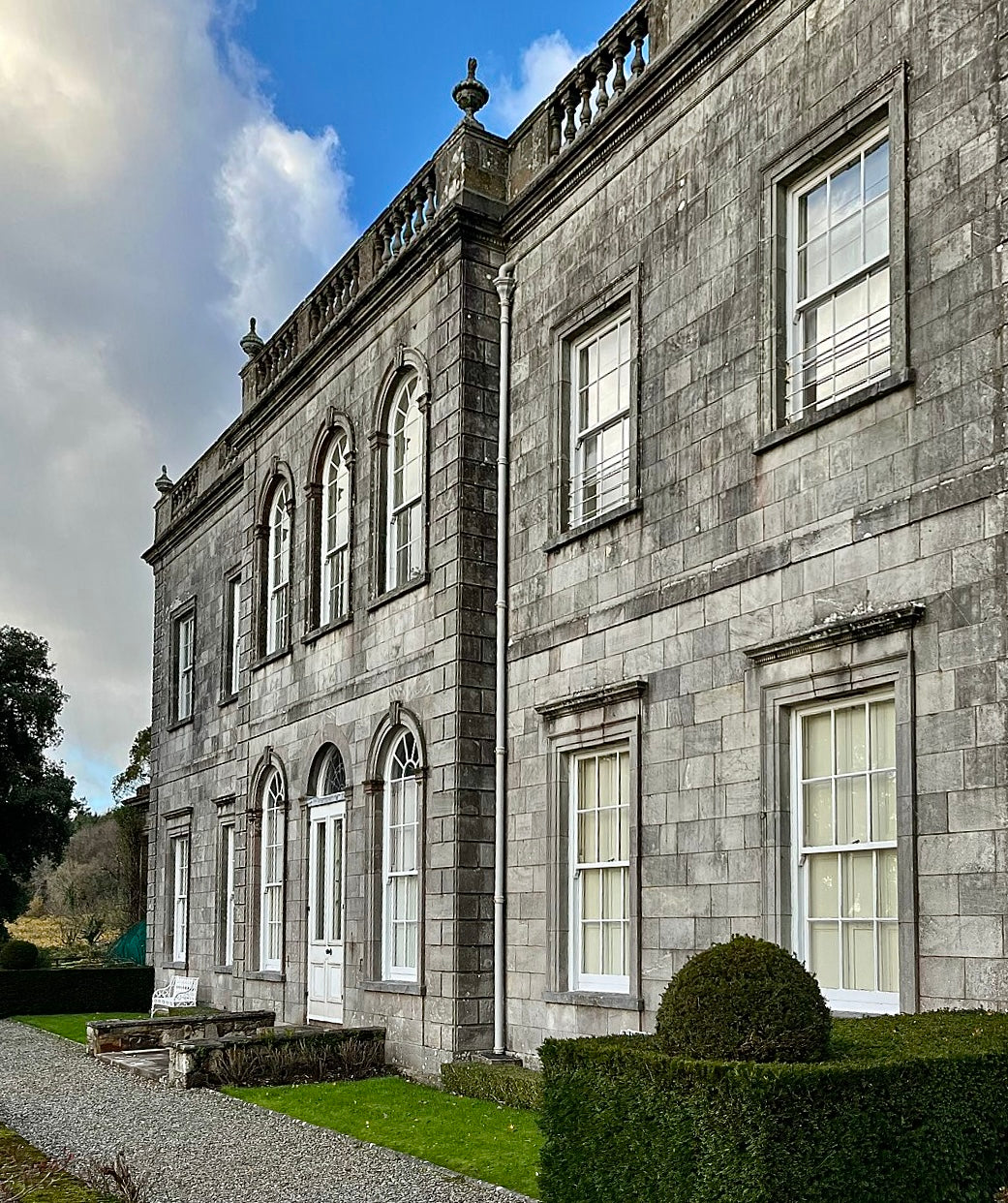
The Keanes are, in fact, an old Irish family of the Ó Catháin, with long Ulster roots. By the eighteenth century, however, they had settled at Cappoquin, having acquired the property from the Earl of Cork in 1738. Cappoquin House was built in 1779.
In 1801 John Keane, member of parliament for Youghal, was granted a baronetcy among the honours that accompanied the Act of Union. With it came an addition to the family arms. The ancient charge of a wildcat, sejant, borne by the family for generations, was altered by the addition of a Union Jack. The gesture was legible to anyone who saw it — a family of Gaelic descent had been raised into the baronetage of the United Kingdom, and had chosen to declare where its allegiance now lay by placing the flag of that kingdom directly into its own crest. As was customary, it then appeared on everything the family owned that could carry a crest, the dinner silver included.
By the early twentieth century the situation had changed entirely. During the Civil War many houses, Cappoquin among them, were burned down. In anticipation of the attack, however, the family had been sent to England and the pictures, furniture and silver removed from the house and put into storage before the men arrived. It is not difficult to imagine that, in the process of packing away a household under threat, it was decided that a Union Jack on the family silver had become a thing better not to own. It is equally possible that no such decision was ever made, and that a slender flag on a tiny staff came away as slender things do.
Benjamin Smith II (1764 - 1823)
The BS mark corresponds to Benjamin Smith II (1764–1823), among the finest English silversmiths of the Regency and, in the judgement of those who look closely, the equal of Paul Storr.
Smith trained under Matthew Boulton at Soho in Birmingham before moving south, establishing himself at Greenwich and entering into partnership with Digby Scott. From 1802 the two supplied Rundell, Bridge & Rundell, goldsmiths and jewellers to the Crown and the conduit through which the greatest English silver of the period reached its patrons. Smith continued under his own mark after the partnership dissolved in 1807, and worked into the 1820s, latterly alongside his son.
Dimensions
Overall:
Height: 7.60 cm / 3”
Width: 8 cm / 3.25”
Depth: 8 cm / 3.25”
Silver crest approximately:
Height: 4.30 cm / 1.70”
Width: 5 cm / 1.95”
Depth: 3.50 cm / 1.38”
Condition
Ready for placement and immediate enjoyment. Polished silver. Fitted onto a later base.